Psychedelics
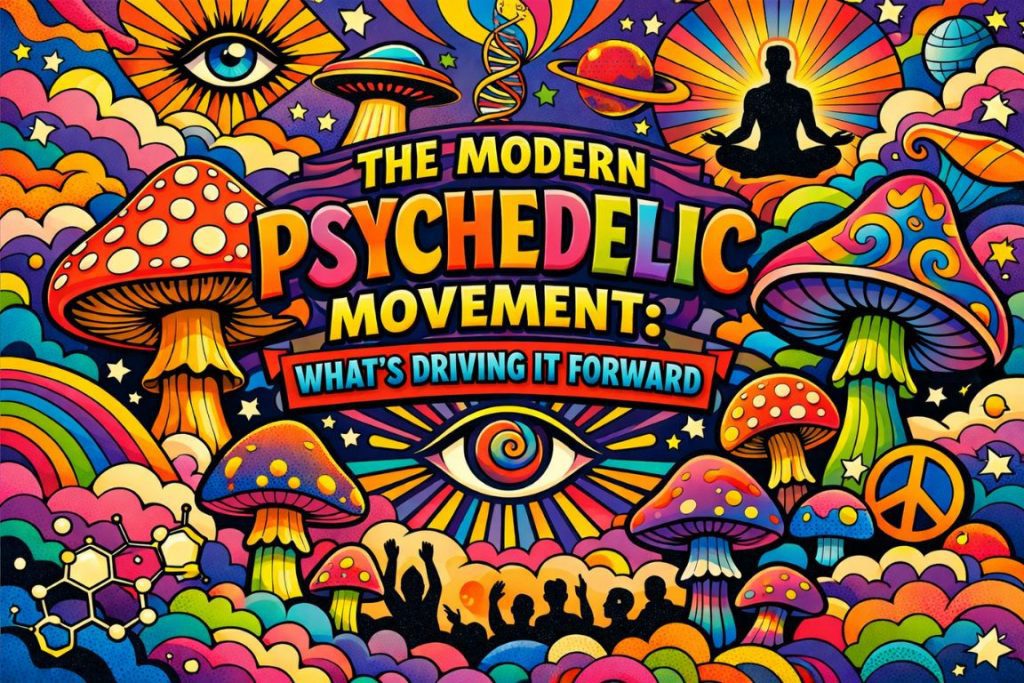
The Modern Psychedelic Movement: What’s Driving It Forward
Jul
The modern psychedelic movement is not a repeat of the past. While psychedelics were once associated primarily with counterculture, today’s conversation is being shaped by science, mental health research, and policy discussions. What’s driving this renewed interest forward is not hype, but a growing effort to better understand the mind and how mental well-being can be supported.
A Shift From Stigma to Research
For decades, psychedelic substances were largely excluded from scientific study due to legal and cultural barriers. In recent years, those barriers have begun to shift. Leading research institutions are now studying psychedelics using modern neuroscience tools and rigorous clinical frameworks.
Organizations such as Johns Hopkins Center for Psychedelic & Consciousness Research and Imperial College London’s Centre for Psychedelic Research are investigating how these substances affect brain networks involved in perception, mood, and self-awareness.
🔗 https://hopkinspsychedelic.org
🔗 https://www.imperial.ac.uk/psychedelic-research-centre/
This return to research has helped move the conversation away from speculation and toward evidence.
Mental Health as a Driving Force
Another major factor behind the movement is the global focus on mental health. Anxiety, depression, burnout, and emotional fatigue are more openly discussed than ever before, and many people are seeking a deeper understanding of how the mind works.
Rather than positioning psychedelics as cures, modern research explores whether they can help reveal patterns of thinking, emotional processing, and perception. This aligns with broader mental health approaches that emphasize awareness, integration, and long-term support.
The National Institutes of Health (NIH) has acknowledged the growing body of research examining psychedelics within controlled, clinical settings.
🔗 https://www.nih.gov
Advances in Neuroscience and Brain Imaging
Modern technology has played a key role in advancing the psychedelic movement. Brain imaging techniques such as fMRI allow researchers to observe how psychedelics influence communication between different brain regions.
Studies suggest that psychedelics may temporarily reduce rigid brain activity patterns and increase overall connectivity, which helps explain why experiences are often described as perspective-shifting rather than purely sensory.
This scientific insight has added credibility to the field and encouraged continued study.
Ethics, Policy, and Education
Unlike previous eras, today’s psychedelic movement places strong emphasis on ethics and responsibility. Conversations now include:
- Screening and safety protocols
- Cultural and historical context
- Education over sensationalism
- Careful policy development
This measured approach has helped build public trust and avoid repeating past mistakes.
The Takeaway
The modern psychedelic movement is being driven forward by research, mental health awareness, and scientific curiosity—not cultural rebellion. As evidence grows and conversations mature, psychedelics are increasingly viewed as subjects worthy of careful study rather than simple categorization.
Understanding what’s driving the movement forward helps clarify why it continues to gain momentum in scientific and public discussions alike.
Shop Today and Save
Canada wide shipping only
🛒 Shop Today – 20% off for blog readers
Promo Code: BLOG20
